Film Career Finder
Start Here:
How to Become a Makeup Artist in the Film/TV Industry
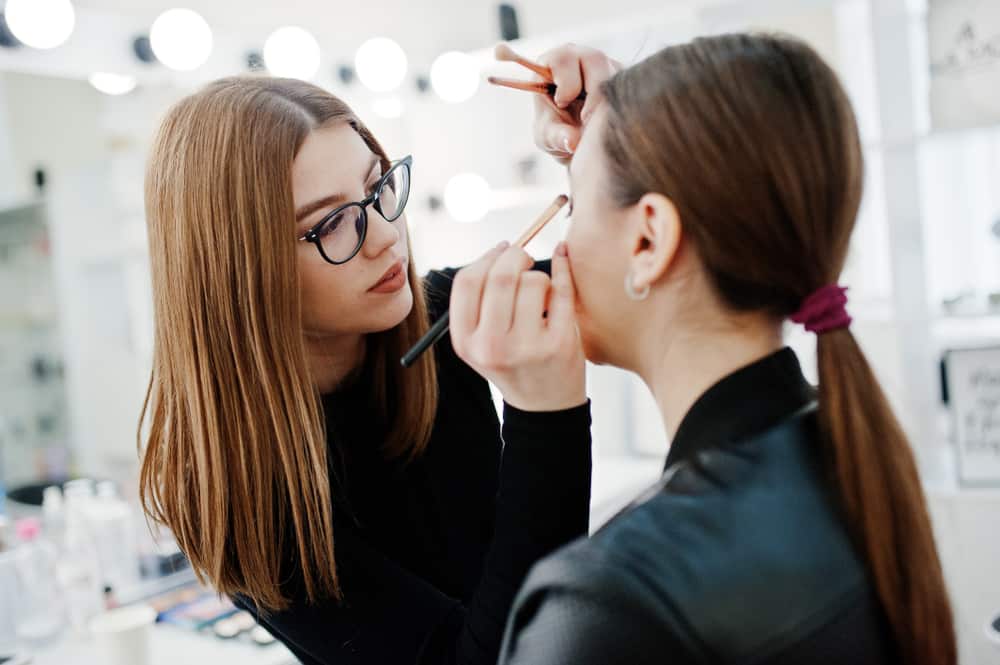
How To Become a Makeup Artist
- Career Description
- Salary
- Career Outlook
- Career Path
- Experience & Skills
- Education & Training
- How to Get Started
- Additional Resources
- Sources
- References
Career Description
A typical day for Makeup Artist Alyson Granaderos begins with loading in her trailer, tent or room where she will be working. Once she sets up her station, the Talent arrives and she can begin working on them. During this time, she’ll also be coordinating with the production’s liaison, which is usually the 1st AD or 2nd AD. This liaison will tell Granaderos how much time she has with each person.
Depending on the nature of the production, Granaderos may have anywhere from a half-hour to multiple hours to work on the Talent. The type of makeup heavily determines time as well. For example, facial effects may demand more than a pure beauty application.
Salary
The media salary for Makeup Artist in the film industry is approximately $75,000. The salary range for film industry Makeup Artists runs from $37,000 to $124,000.
Some opportunities may present where a Makeup Artist will be a salaried employee, such as on a television show where they’re working for multiple months at a time. Those jobs also employ union workers, which can mean more hourly compensation.
But in many cases, jobs are done on a contractual basis, though they might still be union jobs. Granaderos cautions that the day rate for a Makeup Artist can fluctuate greatly, depending on not only if it’s union or non-union, but also if it’s for a film, television show, commercial, editorial or celebrity. While more experienced Makeup Artists can have higher rates, the type of production plays a significant role in what the pay for it will be.
Career Outlook
Granaderos describes the career of a Makeup Artist as one of “hills and valleys.” It’s a world of working freelance, so there can be periods of time when no work is available. Other times, a job might come through that lasts anywhere from a single day to multiple months at a time. Granaderos advises, “Be prepared for the consistency and the inconsistency.”
But it’s also important to find balance no matter how busy one’s professional life is. Granaderos recommends that anyone wanting to be a Makeup Artist or Assistant Makeup Artist still pursue other passions, whether that’s cooking, creating art outside the industry, spending time with family and friends or traveling.
The days while on the job can be long, and it’s easy to get sucked into the industry, but it’s vital to step away to maintain health of mind, body, and spirit. “You have to sustain yourself outside of your work,” Granaderos states.
When she is on the job, Granaderos works most often with the Talent and her on-set liaison, whether that’s the 1st AD, 2nd AD or Key Production Assistant. Depending on the size of the production, she might also be part of a larger makeup team.
Career Path
Granaderos began her career at Columbia College Chicago where she studied film. But before college, she already knew the film industry was where she wanted to be, which is why she was taking film classes even in high school. Though she didn’t initially know how she wanted to work in film, she wanted to have a creative role in it.
Granaderos took one theatrical makeup course in school, which sparked her love for the craft. Then through her roommate, she got in touch with the Makeup Artist on the Jerry Springer show, which filmed in Chicago. The woman invited her to come down to the set, and three days later, Granaderos was working on guests for the show.
Says Granaderos, “It was like winning the lottery.” Her time on Jerry Springer was a big learning experience, and in many ways, the first chapter of her career.
After graduation, Granaderos moved to Los Angeles where she began working for the Visual Artist David LaChapelle. Through this experience, she further grew in her craft. It also provided her opportunities for future jobs, such as with renowned Makeup Artist Paul Starr. She learned to emulate the qualities of those who helped further her career, which is why she aspires to always be generous in time and energy to others in the business.
Because her experience has come from on-the-job training, Granaderos recommends taking any opportunity that will help in learning the trade. As she mentioned earlier, that might mean working for free on student films, photography shoots and other small projects.
Internships can also prove invaluable, as can apprenticeships, should the opportunity arise. Simply by blindly reaching out to an Artist one admires, they could even land themselves an apprenticeship.
With every gig, an aspiring Makeup Artist will not only expand their skill set, but also make connections and grow their portfolio.
- Jump onto as many projects as possible.
- Build relationships.
- Create a portfolio — and Instagram account — and continually grow it.
- Be eager!
Experience & Skills
Individuals of all backgrounds may gravitate towards becoming a Makeup Artist, but Granaderos has noticed that those with a fine arts sensibility do particularly well in this profession. Individuals who have studied painting or sculpting often have a strong sense of color theory and can transition their skills from the canvas or other medium to the face and body.
While she herself does not have a background in fine arts, Granaderos has time and again come across those who do and she finds them to be phenomenal Makeup Artists.
Granaderos moved to LA with a broken-down car, a credit card, the support of her family and virtually nothing else. She mentions this because it takes fearlessness to succeed as a Makeup Artist. Says Granaderos, “You have to want it — and do it — no matter what anyone else says.”
She’s also quick to emphasize that someone aspiring to be in this field must “pull strength from who they are.” The industry can be extremely challenging. But no matter the adversities, the person who will succeed is someone who can persevere and stay true to who they are. Granaderos also mentions humility. “Be open to criticism,” she says, and always willing to learn.
Education & Training
Granaderos notes that she’s “never met another Makeup Artist with a film degree.” Because her learning of the craft was done on the job, she can’t really speak to if someone should invest in going to a trade school that specializes in makeup application. That being said, she believes that anyone who takes that route would certainly learn about the craft.
A Makeup Artist is one of many professionals that collaborates on a given project or production. For that reason, Granaderos finds that her background in film has been invaluable to her career. Her college background enabled her to learn how production works, including what the lingo is, how to break down a script — and very important — how to display proper on-set etiquette.
Says Granaderos, “You can only get so far knowing how to do a smoky eye.” By having a well-rounded education in film or television, an aspiring Makeup Artist has the opportunity to more quickly understand their place in it.
But given that she gained her expertise through real-life experience, Granaderos recommends taking on any practical opportunities that present themselves, including volunteering to be the Makeup Artist on student films and other small projects.
How to Get Started
- Practice on every face you can find.
The first step to becoming a film Makeup Artist is hands-on practice – a lot of it. Start by experimenting on yourself, then offer to do makeup for friends and family. Try out everything from basic beauty looks to creative special effects. Work with different skin tones, ages, and features to build your versatility. Don’t worry about finding your signature style right away; the goal now is to get comfortable applying makeup on others and learn what techniques work for the camera. The more faces you work on, the more you’ll understand blending, lighting, and how products wear over time. Treat each practice like a professional gig (clean your tools, be hygienic, manage time) so you build good habits early.
- Learn the craft through classes and tutorials.
Dive into the education side of makeup artistry. Watch online tutorials, read books by professional Makeup Artists, and study basic art principles like color theory. If you’re still in high school, see if you can take a theater makeup or art class. After 18, you might consider a dedicated makeup academy or workshop – many artists swear by programs focused on film and FX makeup over general cosmetology. (Cosmetology school tends to emphasize hair and nails, whereas film makeup courses teach on-camera beauty and prosthetics.) If formal school isn’t an option, don’t fret – plenty of working Makeup Artists are self-taught. The key is to keep learning: take free workshops, join online webinars, and practice new techniques you discover. Knowledge of lighting, on-set etiquette, and even basic hairstyling can give you an edge as a well-rounded makeup professional.
- Build your makeup kit and master your tools.
Start assembling a basic makeup kit with reliable products and tools. In the beginning, you can get by with drugstore essentials, but invest in quality items as you progress – especially foundation shades, brushes, and sanitation supplies. Learn how each product works and practice proper hygiene (directors will expect you to keep things sanitary on set). Working a few months at a cosmetics store or makeup counter can supercharge your product knowledge; you’ll practice on different skin types and learn which formulas hold up under studio lights.My time in retail was a crash course for knowing color theory, skin tone, and sanitation. All those skills are so important on set.– Jessica Licata - Volunteer on student films and community theater.
To get your foot in the door, say “yes” to small, no-budget projects. Offer your makeup skills for your school play, local theater productions, indie short films, or student film school projects. These gigs might pay in pizza (or nothing at all), but they’re priceless for experience. You’ll learn how to work with Actors, take direction from the Director, and manage quick changes in real production environments. Treat even free jobs professionally – show up on time, with a positive attitude – because the connections you make can lead to bigger opportunities.I did give work away at first. It’s a humbling thing to do. I do still do free work here and there, but I am at the point now where I can pick and choose.– Jessica Licata - Create a portfolio and share your work online.
Start documenting every makeup look you create. Take clear, well-lit photos (and short videos) of your work – whether it’s a glam look on a friend or a zombie makeup you tried on yourself. Over time, these images will form your portfolio to show directors or makeup department heads. Many beginners collaborate with aspiring photographers and models in “trade for print” shoots, providing makeup in exchange for professional photos. Instagram is essentially your digital portfolio; post your best shots there and on other platforms where filmmakers scout talent. Aim to show range: beauty makeup, old-age makeup, gore effects, period looks, etc.Take photos of everything and don’t focus on an aesthetic. This comes over time… best to be versatile anyway!– Experienced film Makeup Artist, via Reddit - Network and find mentors in the industry.
Who you know can be as important as what you know in film and theater. Get involved in the community: introduce yourself to local filmmakers, drama teachers, or theater directors and let them know you’re eager to do makeup for their projects. Join online groups where productions post crew calls – Facebook groups like “Paid Film and TV Jobs” or “I Need A Crew” are great for finding gig leads. Don’t be shy about reaching out to Makeup Artists you admire, either. A polite DM or email asking for advice or assistant work can sometimes open doors.I messaged the Makeup Artist I’d been following for years and asked if she needed help. I was shocked she responded. Within two weeks, I was her assistant on a music video set.– Reddit user /mua-throwaway22 - Seek out assistant jobs and on-set experience.
Working under an established film or TV Makeup Artist is one of the best ways to learn the ropes. Keep an ear out for opportunities to be a Makeup Assistant or intern, even if it’s just for a day. You might start by cleaning brushes or organizing the kit – but you’ll get to see the pace of a real set and pick up techniques from a seasoned pro. Let your network know you’re available.I met a senior artist through my day job and ended up assisting her on a Food Network shoot. That’s what started everything for me.– Jessica Licata - Embrace the freelance hustle and never stop improving.
A career as a makeup artist in film, television, or theater is often a marathon, not a sprint. It may take years of grinding on small gigs before you break into bigger productions – so persistence is key. Use downtime between projects to keep sharpening your skills: take advanced workshops, update your portfolio, and build range in your looks. Learning related skills (like hairstyling or prosthetics) can also make you more hireable. Stay active in your networks and keep following up on leads.Trust the process. Everything happens for a reason. Never compare yourself to others; it’s a dark place to be. Everything will fall into place with hard work and the right mindset.– Mandy Artusato
Additional Resources
Granaderos belongs to IATSE Local 706, which is the Make-Up Artists & Hair Stylists Guild. From when she first arrived in LA, it took eight more years to finally make it into this union. But she mentions that one of the first things she did when she moved out west was contact the union to learn about the qualifications to getting in.
By speaking to the union and learning what it required, she was able to figure out how to get there. That’s why she recommends that it’s never too soon to reach out to the union.
Also, joining more general entertainment communities, such as Women in Film or Film Independent will give aspiring Makeup Artists the chance to network with others in the industry and build relationships.
Sources
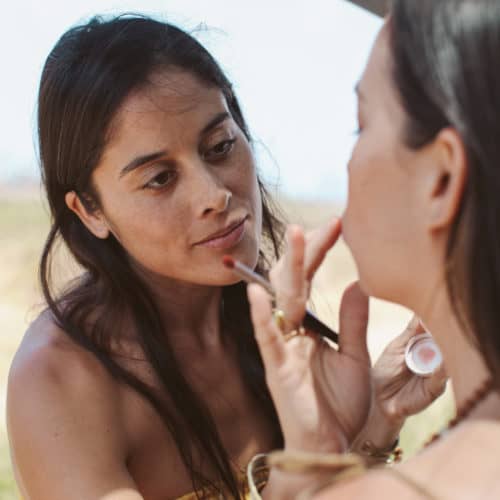
Alyson Granaderos
Alyson Granaderos began her career in Chicago as a Makeup Intern on the Jerry Springer show. She earned her BA in Film & Video from Columbia College and moved to Los Angeles soon after. Her first job out of college was as an Assistant Makeup Artist for renowned Fashion Photographer David LaChapelle.
Continuing her career in music videos, commercials, TV and film, Alyson worked with Actors and Artists such as Britney Spears, John Legend, Sarah Paulson and America Ferrera.
In 2008, Alyson landed a gig as the Key Makeup Artist on ABC’s Extreme Makeover: Home Edition. The show gave her the opportunity to travel all over the U.S. for three years. Alyson has been Key Makeup Artist on five feature films, including Amber Tamblyn’s directorial debut, Paint It Black.
She is a member of her local union 706 and recently wrapped shooting season two on NBC’s A.P. Bio. She is also the proud mom of a super handsome five-year-old son. To see Granaderos in action, check out this segment via Kababayan Weekly.
References
- 1THR Staff. "Hollywood's Salary Report 2017: Movie Stars to Makeup Artists to Boom Operators". The Hollywood Reporter. published: 28 September 2017. retrieved on: 8 April 2020