Film Career Finder

Start Here:

1. 1. Which of these categories are you most interested in? *This question is required.
3. 3. Which careers are you most interested in? Select as many as you like. *This question is required.
  1. Introduction
  2. An Idea/Script
  3. Film Tools/Film Gear
  4. Collaborators/Crew
  5. Production
  6. Editing/Post-production
  7. Distribution and Marketing: Make Your Movie Watchable (and Findable)
    1. Pick your release lane early (so you stop guessing later)
    2. Clearances: the not-fun stuff that keeps your film alive
    3. Build your marketing assets while you shoot (future you will cry happy tears)
    4. Your no-panic deliverables checklist
    5. DIY distribution options that don’t require a gatekeeper
    6. A small launch plan you can actually finish

If you want to learn how to make a movie, the best thing to do is make one. Yep. By starting DIY, you will get a sense of the big picture and be more likely to become a better filmmaker down the road.

In fact, there is no better time to learn how to make a movie. You have tools at your fingertips that your creative forefathers would have died for. While most films cost a minimum of a couple million dollars to make, you can truly make a movie for next to nothing. All it takes is enlisting the help of friends, using your own smartphone, and perhaps raiding your fridge.

If you are reading this article on a phone, there’s a good chance that that phone has a better camera than the early digital cameras with which many people learned and mastered filmmaking. So if you have an idea, what are you waiting for?

In the simplest terms, you make a movie by following these three steps:

  1. Writing a script
  2. Shooting it with a camera and actors
  3. Editing the footage together

But that’s easier said than done. Getting the idea out of your head and onto the screen can be a daunting task, but once it is broken down in steps, it becomes more manageable. Even better, once you master these steps, whether you are making a film with an iPhone or with a full camera kit from a rental house, they are relatively the same — the biggest difference being that the toys are more expensive and the crews are bigger.

But let’s start small. Let’s say that you want to use that phone in your hand to make a movie. What would you need? Well, several things, from the creative to the technical, and if you are not technical, do not let that deter you.

In our discussion of how to make a movie, we’ll cover:

  • An idea/script
  • Film tools/film gear
  • Collaborators/crew
  • Production
  • Editing/post-production

An Idea/Script

A lot of people are afraid to get started because they don’t think they have a good idea. Trust me, an idea doesn’t have to be good in order for you to learn or even make a good film. All you need is a story. It can be as simple as telling the story of someone who rolls out of bed, stumbles to the coffeemaker only to find that she is out of coffee.

The goal with storytelling is to get someone to relate, and with filmmaking, it’s all about the images you use to tell the story. So as you develop your idea, don’t over think it. It just needs to be something you can visualize and execute.

Overall, what’s going to make your movie unique is your point of view. Take the example of no morning coffee. How does she feel when she discovers there is no coffee? How does that translate visually? Does she grab her hair in despair or throw the empty pot against the wall?

Whatever story you want to tell, put it in a script. For the most part, screenwriting is what you see and what you hear. Just remember that it’s always more interesting to tell the story visually. Rather than having the character say, “Oh no, there’s no coffee,” show us the empty coffee container, show us her reaction.

Another thing you will want to do is get feedback on your script. Have someone read it to make sure it makes sense. If it doesn’t make sense, fiddle with it until it does. If it does make sense, still fiddle with it to make it better.

Film Tools/Film Gear

The most accessible camera these days is on a smartphone. It can be an Android or an iPhone; all you need are the right accessories. In order for you to get the most out of your phone camera, you will need an app called Filmic Pro; this app will get your phone to behave more like a camera. You will also want to get lenses so you can shoot a better variety of shots.

There are two ways to go here — you can get lenses that are designed specifically for smartphones – like Moment lenses, or you can use an adapter, like the Beastgrip adapter that will allow you to use regular camera lenses with your phone.

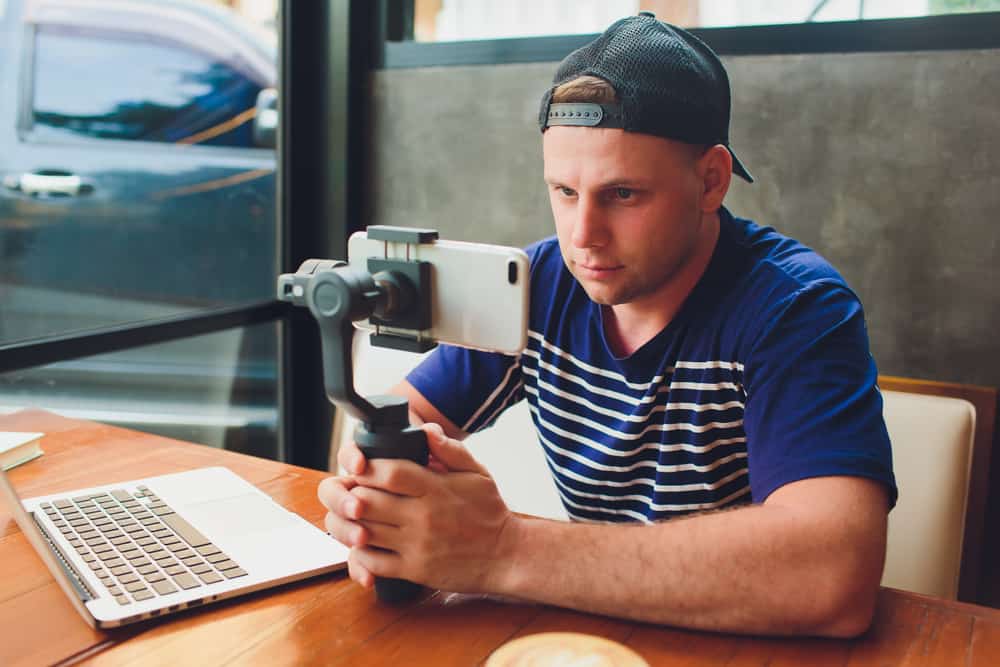
You may also want a tripod or a stabilizer to keep the camera steady; all you need is a mount adapter to put your phone on a tripod and there are stabilizers built specifically for phones.

Next, you need sound equipment. Unfortunately, phones (and most cameras, for that matter) don’t record good sound, so you will need a sound recording device, like a Zoom or Tascam. You will also need a good microphone on a boom pole to record the sound.

You can also get lavalier microphones – which are the kind that you attach to an Actor to record dialog, as well.

Collaborators/Crew

Alright, technically you can do all of this on your own and maybe you want to start that way — maybe film your cat to get some practice in, but eventually, you will want Actors, someone to record the audio, someone to operate the camera, and ideally someone to help produce it. (Without getting into it, a Producer will help you stay organized and on track.

Learn more about the role played by Producers here.) So, finding collaborators is essential to filmmaking. There are many ways to go about this – you can post something on social media, you can go to events sponsored by your local film community, or if you are in school, get to know the film and media students.

One thing to keep in mind as you are meeting people is to find folks that you enjoy being around, who have similar interests, and who are interested in learning and mastering skills. If you know nothing about the camera, lighting or recording sound, find people who are passionate about these things.

Once you have your team, get their input about the script and start to plan what you will need to make it. The more planning you do, the more successful you will be. The basics you will need are locations, Actors, and food!

You will also want to talk to your team about how things will be shot. Create a shot list, which will be your roadmap during production. Some people like to storyboard, but that’s up to you.

It’s just important to have a plan because you don’t want to waste people’s time during production. Something that will help you create a shot list is to remember that each time you move the camera, it’s a new setup, which is a shot.

Shots are like sentences, some are long, some are short, but when you put them together, there is a rhythm and a pace. It’s a good idea to become familiar with the different kinds of shots: wide, medium, close up, etc. Understanding the language will help you communicate your movie ideas to your team.

Production

This is the day you all come together to get the job done! You have done your homework; you have food and drinks to keep you energized; now you will spend the day perfecting each shot. Some of the things you will be focusing on will be blocking – how the Actors move through the space in relation to the camera, framing – how the shot is framed, and the performance of the Actor.

When you block a scene, you decide where the camera goes and how the Actors will move through the set. This includes any action they may do like grab a set of keys, when to pat someone on the back or when to sit down.

Once you decide these things, you can put tape on the floor to make sure the Actors have reminders of where to stand and when. How you frame the shot is literally what you see in your viewfinder. Different framing can say different things: for example, if you have two Actors placed at the end of each frame, perhaps you are saying that they are not connecting.

If you have a wide shot and the character is small on the screen, maybe you are suggesting that he feels powerless. Working with Actors is also important. Actors come to set with some terrific ideas, but it is important to make sure they hit the tone you are trying to achieve, whether it is humor or drama. Actors love to know what they can do to make their performance better.

Editing/Post-production

Once you have your movie in the can, you are ready to edit. Well, almost. You will need to sync the sound in what is called a non-linear editing system (NLE), which is a fancy way to say editing software, where you will put the pieces you shot together.

Again, this is something that you can learn and I highly suggest you learn the basics, but there are plenty of people who want to master this craft and are hungry to find material to work on to learn and hone their skills. Also, editing is like writing. Getting feedback will make your movie better.

After the editing is done, you still need to polish your film up. You will need to make sure all your shots are color corrected, which can be done in your NLE or you can have a professional do it. Again, always look for people who want to practice.

The same goes for post-production sound. Post-production sound involves a lot of detail work, which includes cleaning up the dialog, laying in sound effects, music, and balancing all these elements in what is called the mix.

Once you have gone through these steps, you are a filmmaker! But one thing about filmmaking is the more you learn, the more you realize the less you know. Each new project will present new challenges, and if they don’t, you’re not challenging yourself to get better, which is really what makes all this so fun.

Distribution and Marketing: Make Your Movie Watchable (and Findable)

If you’re learning how to make a movie, here’s the step beginners skip the most: planning how anyone will actually watch it. Not in a “get it on Netflix tomorrow” way. In a “can I legally post this, can festivals program it, and do I have the files people require” way. The good news is: you can set yourself up for success with a few smart choices and some boring-but-powerful prep.

Pick your release lane early (so you stop guessing later)

You don’t need a 40-page distribution plan. You just need to pick a lane so every decision stops being a coin flip. Most DIY filmmakers fall into one of these paths: festival-first, internet-first (YouTube or Vimeo), or community-first (local screenings that build momentum). Each lane wants slightly different things from your runtime, poster, trailer, and even music choices.

If you’re unsure, choose the lane that matches your personality. If you hate waiting, go internet-first. If you love networking and Q&As, try festivals. If you’re building something in a city or scene, community-first can be surprisingly powerful.

Clearances: the not-fun stuff that keeps your film alive

DIY films don’t usually die because the cinematography is bad. They die because someone used a song they don’t own, filmed a logo that becomes a headache, or never got permission from a location. You don’t have to be paranoid. You just have to be intentional, especially if you ever want your film to travel beyond your Instagram.

  • Get releases for actors and key locations, even if everyone’s your friend.
  • Be careful with music. “It’s only in the background” is not a real rule.
  • Watch the frame edges for screens, posters, art, and brand logos you didn’t plan to feature.
  • Keep a simple paper trail in one folder (digital is fine): releases, music notes, contact info.

Build your marketing assets while you shoot (future you will cry happy tears)

Reddit film festival folks complain about the same thing over and over: filmmakers turn in gorgeous films with terrible stills. Festivals, blogs, and platforms need images that sell your story at thumbnail size. That means you should grab intentional stills while filming, not random screenshots later.

Do yourself a favor and assign one person to capture a few clean assets each shoot day: vertical clips for socials, a handful of still photos that show faces and emotion, and one short behind-the-scenes moment that makes people curious. You’re not “selling out.” You’re giving your film a chance.

Your no-panic deliverables checklist

Different platforms ask for different specs, but the core package stays pretty consistent. If you collect this stuff once, you’ll use it everywhere: festivals, press, grants, distributors, and your own socials.

  • Logline (one sentence that actually makes someone want to click).
  • Short synopsis (100 to 200 words).
  • Director statement (why this story, why you, why now).
  • Credits list (clean and accurate).
  • Poster (even a simple one, but readable on a phone).
  • 5 to 10 high-res stills labeled with the film title.
  • Trailer plus a 15-second teaser for social.
  • Captions (an .SRT file makes you look wildly professional).
  • Master export (your best-quality file, not just the version you text friends).

If you want a fast template for an EPK, this free one is a solid starting point: +Reel’s EPK template.

DIY distribution options that don’t require a gatekeeper

There are more “middle paths” than most filmmakers realize. You can self-release online and still look legit. You can go festival-first and still post a teaser series. You can even explore platforms that help you pitch to streaming channels without giving away your life rights.

If you want a straightforward overview of how distribution works, StudioBinder’s guide is a clean explainer: What Film Distribution Is (and how it works).

For filmmakers exploring platform-style distribution, Filmhub explains their process here: Filmhub’s distribution steps. If you’re going fully DIY, Prime Video Direct is one option to research for self-publishing: Prime Video Direct.

A small launch plan you can actually finish

Most launches fail because they’re imaginary. Keep it simple. Build one little wave of attention you can control, then ride it into whatever comes next.

  • 4 weeks out: lock your title, logline, and poster draft.
  • 3 weeks out: trailer out, plus a short teaser cut for social.
  • 2 weeks out: send your EPK to a short list of blogs, creators, and community pages.
  • Release week: do one event (screening, live Q&A, or premiere stream) and record clips.
  • Week after: post the best moments, then point people to one clean link to watch.
Don’t think small, but especially when it comes to making your first thing, think about what’s achievable and try to go after that. – Emma Seligman (director of Shiva Baby) in The Creative Independent
I think you have to chase what interests you. I don’t think about making films for other people. – Charlotte Wells (director of Aftersun) in The Guardian